




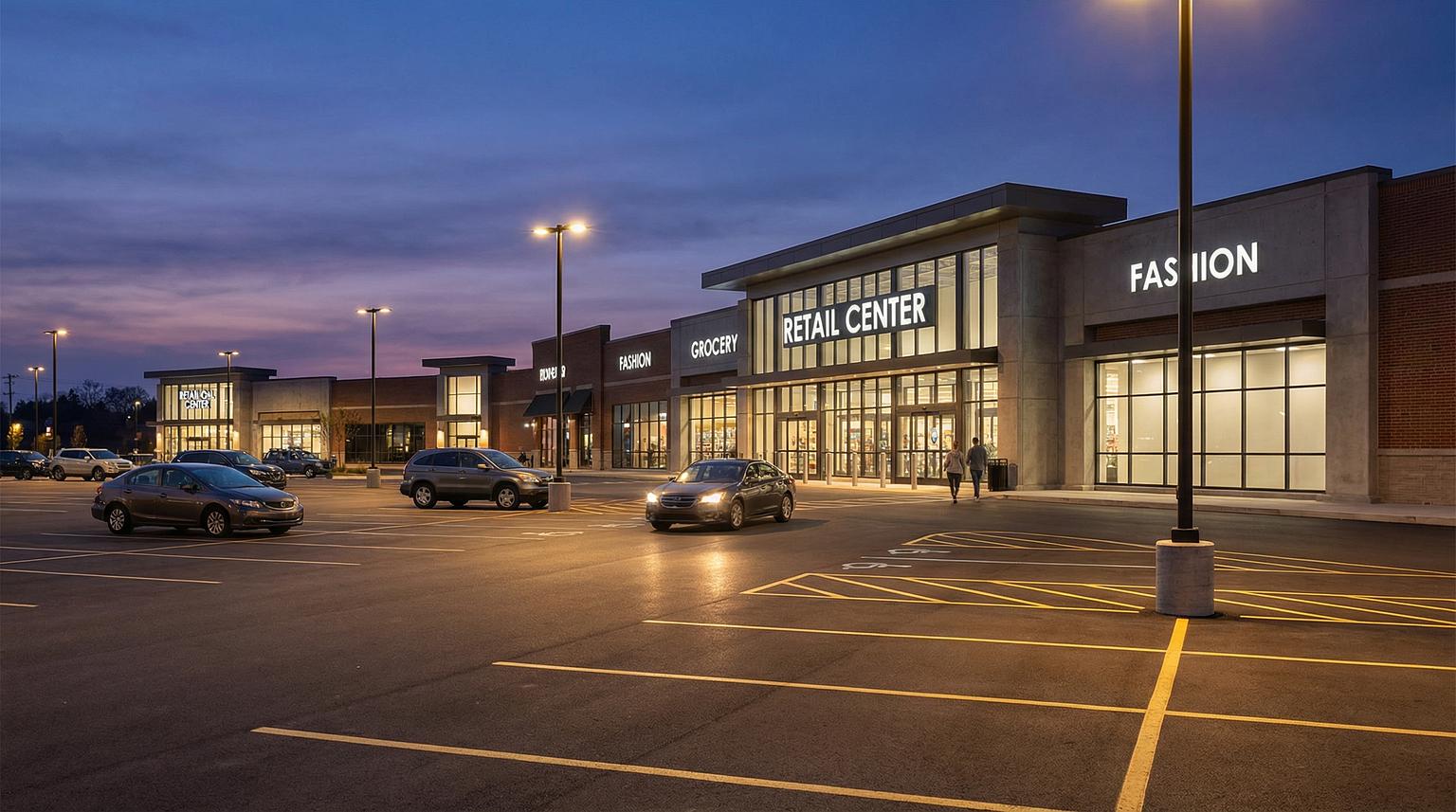


Retail parking lots account for more customer touchpoints than any aisle or checkout lane—yet they remain one of the least protected zones in a typical store's security footprint. Organized retail crime (ORC) groups stage vehicles there. Vehicle break-ins cluster during evening hours. And when an incident does happen, loss prevention teams often discover that the footage is too dark, too wide, or too late to be useful.
Choosing the right parking lot camera system in 2026 means balancing deterrence, evidence quality, deployment speed, and total cost of ownership (TCO) across dozens—or hundreds—of locations. This guide compares every major camera type, breaks down the cost structure, and walks through a deployment checklist so teams can move from evaluation to action with confidence.
Key terms for evaluating parking lot camera systems
A few quick definitions before we compare options:
Term |
Definition |
|---|---|
LPR / ALPR |
License plate recognition (or automated LPR). Cameras capture plate images, run optical character recognition, and cross-reference watchlists. |
PTZ |
Pan-tilt-zoom. Motorized cameras that rotate horizontally (up to 360°), tilt vertically, and zoom optically—often 50X or more. |
Edge AI |
Video analytics processed on the camera or a local device rather than in a remote data center, reducing bandwidth and latency. |
VMS |
Video management system. The software layer that records, organizes, and plays back footage from all connected cameras. |
IP65 / IP67 |
Ingress protection ratings indicating dust-tight and water-resistant housings suitable for outdoor parking lot environments. |
PoE |
Power over Ethernet. A single cable carries both data and electrical power, simplifying installation. |
Why parking lots are the highest-risk blind spot in retail
Parking lots represent the first and last customer touchpoint for any retail property. They directly influence brand perception and shopping behavior. Stores with inadequate parking lot security report reduced evening foot traffic and customer attrition (Source: Lot Guard).
Three risks make this zone expensive to ignore:
Liability exposure. Property owners hold a legal duty of care for parking facilities. Under negligent security doctrine, retailers face premises liability claims when they know—or should know—criminal activity is likely and fail to take reasonable preventive steps (Source: Deputy & Mizell).
ORC staging. The FBI documented over 3,300 flash-mob shoplifting incidents between 2020 and 2024, many of which staged vehicles in parking lots before coordinated store theft (Source: Scylla AI).
Insurance pressure. Documented security gaps in parking areas increase premiums and restrict policy coverage for loss prevention claims (Source: Lot Guard).
How do LP teams cover 30 or 40 stores without being in every parking lot at once? Start by matching the right camera type to each zone.
Parking lot camera types compared: fixed, PTZ, mobile, and AI-enabled
Each camera type has a job. A dome that works well for a wide overview will fail at capturing a license plate. A PTZ that excels at tracking a moving subject leaves the rest of the lot unmonitored while zoomed in. The table below compares the five primary camera types used in retail parking lot video systems today.
Feature |
Dome (fixed) |
Bullet (fixed) |
PTZ |
Mobile trailer |
LPR (specialized) |
|---|---|---|---|---|---|
Field of view |
Wide (90–180°) |
Moderate (50–90°) |
Variable (up to 360° pan) |
180–360° configurable |
Narrow (20–40°) |
Zoom |
Fixed optical |
Limited |
50X–66X optical |
Configurable |
4X–8X |
License plate capture |
Unreliable (glare and angle issues) |
Moderate |
Strong (motorized positioning) |
Strong (tower height advantage) |
Optimized (85–95% accuracy under ideal conditions) |
Night vision |
Standard IR |
IR or LED options |
Dual-mode IR / full-color |
IR with integrated lighting |
Specialized IR filtering |
Maintenance |
Low |
Low |
Moderate (motorized parts) |
Moderate (mobile platform) |
Low |
Per-unit hardware cost |
$300–$800 |
$400–$1,200 |
$1,500–$3,500 |
$15,000–$30,000 |
$600–$1,500 |
Redeployability |
None |
None |
Remote control across sites |
High (trailer-based) |
None |
AI analytics compatibility |
Good (overview patterns) |
Strong (detail-level) |
Strong |
Strong |
Strong (specialized) |
Source: Eufy Commercial
Fixed dome and bullet cameras
Dome cameras deliver broad, discreet coverage and resist vandalism. They work well as secondary "overview" units but struggle with license plate capture—IR glare off retro-reflective plate paint creates an unreadable blob at night (Source: Backstreet Surveillance).
Bullet cameras offer a narrower, more targeted field of view. Positioned at entry gates, loading docks, or cart corrals, they concentrate pixel density on decision-critical zones. PoE connectivity simplifies installation to a single cable per camera.
PTZ cameras
A single PTZ unit covers the area that typically requires three to five fixed cameras. Optical zoom of 50X or more allows operators to identify subjects at extended distances—up to 3 km in daylight (Source: Mammoth Security). Auto-tracking models follow moving subjects within the monitored zone without manual intervention.
The trade-off: while a PTZ is zoomed in on one incident, the rest of its coverage area goes unmonitored. Pairing PTZ units with fixed cameras solves this gap.
Mobile trailers and autonomous units
Tower-mounted camera platforms (typically 20 feet tall) deploy in 5–15 minutes with a single operator and require no permanent electrical infrastructure (Source: ReconView).
Solar power and cellular connectivity make them viable for remote or off-grid lots.
Visible deterrence matters here. Mobile trailers with audio deterrence components reduce loitering incidents by 20–30% within the first 30 days of deployment (Source: RAD Security). For multi-site portfolios, the ability to reposition units as incident patterns shift—seasonally or around promotional events—delivers flexibility that fixed infrastructure cannot match.
Tip: When evaluating mobile trailers vs. fixed cameras, consider your incident pattern volatility. If hot spots shift seasonally or around promotional events, mobile units deliver better ROI. For persistent problem areas, fixed infrastructure with PTZ coverage provides more consistent long-term deterrence.
LPR-enabled cameras
License plate recognition cameras capture plate images, apply optical character recognition, and cross-reference watchlists in real time. Deployed at "choke points" where vehicles slow or stop, specialized LPR cameras outperform general-purpose units by 30–40% in comparable conditions (Source: e-con Systems).
Cross-location LPR data identifies vehicles repeatedly circling lots or traveling between multiple store locations—a signature of organized retail crime staging operations (Source: Lot Guard).
Solar, cellular, and off-grid deployment options
What happens when a high-incident lot has no wired power or network drops? Solar-powered PTZ units with battery backup and cellular connectivity address this barrier directly, enabling continuous operation in off-grid locations.
Mobile trailers take this further by bundling solar power, cellular backhaul, and integrated lighting into a single relocatable platform. For teams evaluating deployment across dozens of stores, this eliminates the need for electrical permits, trenching, or network extensions at each site.
Edge AI processing reduces bandwidth demands by running analytics on the device itself. Only alert summaries and metadata travel to the cloud, which significantly cuts bandwidth utilization compared to streaming full-resolution footage to a central server.
Total cost of ownership: a realistic breakdown
How much does a comprehensive parking lot monitoring system actually cost? The answer depends on whether teams purchase fixed infrastructure, lease mobile units, or blend both approaches.
Cost category |
Fixed infrastructure (per location) |
Mobile trailer (per unit) |
Remote monitoring (per location) |
|---|---|---|---|
Hardware / capital |
$2,000–$15,000+ (8–50+ cameras) |
$15,000–$30,000 (purchase) or monthly lease |
N/A |
Installation |
~20% of hardware cost |
5–15 min single-operator setup |
N/A |
Cloud VMS subscription |
$50–$200/month |
Included in many platforms |
$50–$200/month |
24/7 remote monitoring |
$100–$300/month |
$100–$300/month |
$100–$300/month |
Annual maintenance |
$1,000–$3,000 |
Moderate (mobile platform) |
N/A |
Video storage (30–90 days) |
$500–$2,000/year |
Included in many platforms |
Included |
Source: Eufy Commercial
Compare this against on-site security guards at $25–$45 per hour. A medium retail center running two to four guards per shift spends $2,400–$4,320 per month on a single shift alone (Source: Cascadia Global Security). A blended model—visible deterrent technology plus remote monitoring plus targeted on-site presence—achieves 40–60% cost reduction versus full-time staffing while maintaining security effectiveness (Source: Cascadia Global Security).
Integrating parking lot cameras with in-store loss prevention
Parking lot activity directly correlates with in-store shoplifting patterns. ORC groups stage personnel and vehicles in lots before coordinated store theft. Timestamp correlation—matching vehicle arrival to in-store incident timing—identifies reconnaissance behavior that isolated camera feeds would miss (Source: Lot Guard).
Effective integration follows a clear data flow:
LPR captures plate data at lot entry and exit points.
AI analytics flag anomalies—vehicles circling, extended dwell times, or plates matching a watchlist.
Alerts route to LP teams via mobile app with video clips showing the trigger event.
In-store response coordinates with parking lot intelligence—additional staffing, product protection, or law enforcement dispatch.
Centralized dashboards aggregate incidents across 20–100+ properties for trend analysis and executive reporting.
Enterprise VMS platforms support this workflow through open APIs, backward compatibility with existing camera types via ONVIF protocol, and role-based access controls.
Deployment checklist for multi-site retail portfolios
A structured rollout reduces risk and builds internal buy-in. The following phased approach aligns with ASIS Physical Security Standard (PSP) Section 3.2 and NFPA 730 Chapter 7 requirements (Source: PopProbe):
Phase 1: Assessment and entry-point coverage
Walk the perimeter to identify high-risk zones (entry points, loading docks, cart corrals, isolated areas).
Assess lighting against NFPA 730 standards (1–2 foot-candles minimum throughout the lot).
Map existing camera coverage and document blind spots.
Review 12 months of incident history to establish a baseline.
Deploy LPR-enabled cameras and lighting upgrades at entry and exit points.
Phase 2: High-incident zone targeting
Position mobile trailers at problem areas identified in the assessment.
Install PTZ cameras for active monitoring of recurring hot spots.
Configure AI alert thresholds per zone—higher sensitivity for high-value areas, lower for general perimeter.
Phase 3: Perimeter and overview coverage
Add dome cameras for broad lot overview.
Upgrade or install emergency communication devices.
Phase 4: Integration and optimization
Connect all cameras to a centralized VMS with cloud dashboard access.
Tune AI models through a 30–90 day learning period to reduce false positives from 15–20% down to 2–5% (Source: GV Monitoring).
Test monitoring center notification workflows and alert escalation procedures.
Document chain-of-custody procedures for legal defensibility.
Complete staff training on operational procedures.
Limitations and considerations before purchasing
No camera system eliminates all risk. Several factors deserve honest evaluation:
AI tuning takes time. Untuned systems generate a 15–20% false positive rate from weather, animals, and headlights. Expect 30–90 days of site-specific learning before accuracy stabilizes above 90% (Source: GV Monitoring).
LPR accuracy degrades in poor conditions. Heavy rain, snow, motion blur, and bent plates can significantly reduce read accuracy.
PTZ coverage gaps. While zoomed in on one subject, the rest of the field goes unmonitored. Pair PTZ units with fixed cameras to maintain continuous coverage.
Retention and storage costs scale. 4K footage occupies 3–4X the storage of 1080p. Retention policies must balance resolution benefits against ongoing storage expense.
Legal requirements vary by state. Two-party consent jurisdictions require explicit consent for audio recording. Retention policies, signage requirements, and chain-of-custody standards differ across states.
Key takeaway: Budget for a 30–90 day AI tuning period after deployment—false positive rates drop from 15–20% to 2–5% once the system learns site-specific conditions. Always pair PTZ cameras with fixed units to eliminate coverage gaps when operators zoom in on active incidents.
How Spot AI turns parking lot cameras into active AI teammates
Most camera systems record history. Spot AI's AI Security Guard turns that footage into action—detecting loitering, triggering automated deterrence with strobes and voice-downs, and handing operators a clean incident log before anyone reaches for a radio.
Here's how Spot AI helps multi-site LP teams handle the hurdles that matter most:
Pain point |
Spot AI capability |
|---|---|
Blind spots and unmanaged perimeter activity |
Loitering detection, unauthorized entry alerts, and context-aware AI detections across parking lots, loading docks, and after-hours zones |
LP teams stretched thin across 20–40+ stores |
Cloud dashboard with centralized visibility across all locations; unlimited user seats so every stakeholder has access |
Inconsistent and expensive guard coverage |
AI Security Guard delivers 24/7 automated deterrence—strobes, talk-downs, floodlights—at roughly one-third the fully-loaded cost of round-the-clock guard coverage |
Slow investigations and fragmented evidence |
Attribute search lets teams type "red truck" or "person with backpack" to jump to the exact moment; time-stamped clips and case files package evidence in minutes |
Technical friction and deployment anxiety |
Camera-agnostic platform works with any IP camera; plug-and-play hardware connects via cellular or PoE with no new wiring; system live in under a week |
Spot AI filters more than 90% of nuisance alarms, ending alert fatigue for security operations center operators and letting teams focus on verified incidents. The platform's edge AI with NVIDIA GPUs processes video locally on the Intelligent Video Recorder, keeping bandwidth low and latency under one second.
For teams managing a portfolio of retail locations, the cloud dashboard aggregates parking lot incidents—vehicle break-ins, loitering, ORC indicators—across every property. Trend analysis identifies geographic hot spots and high-risk timeframes, turning isolated data points into a coordinated deterrence strategy.
See Spot AI in action

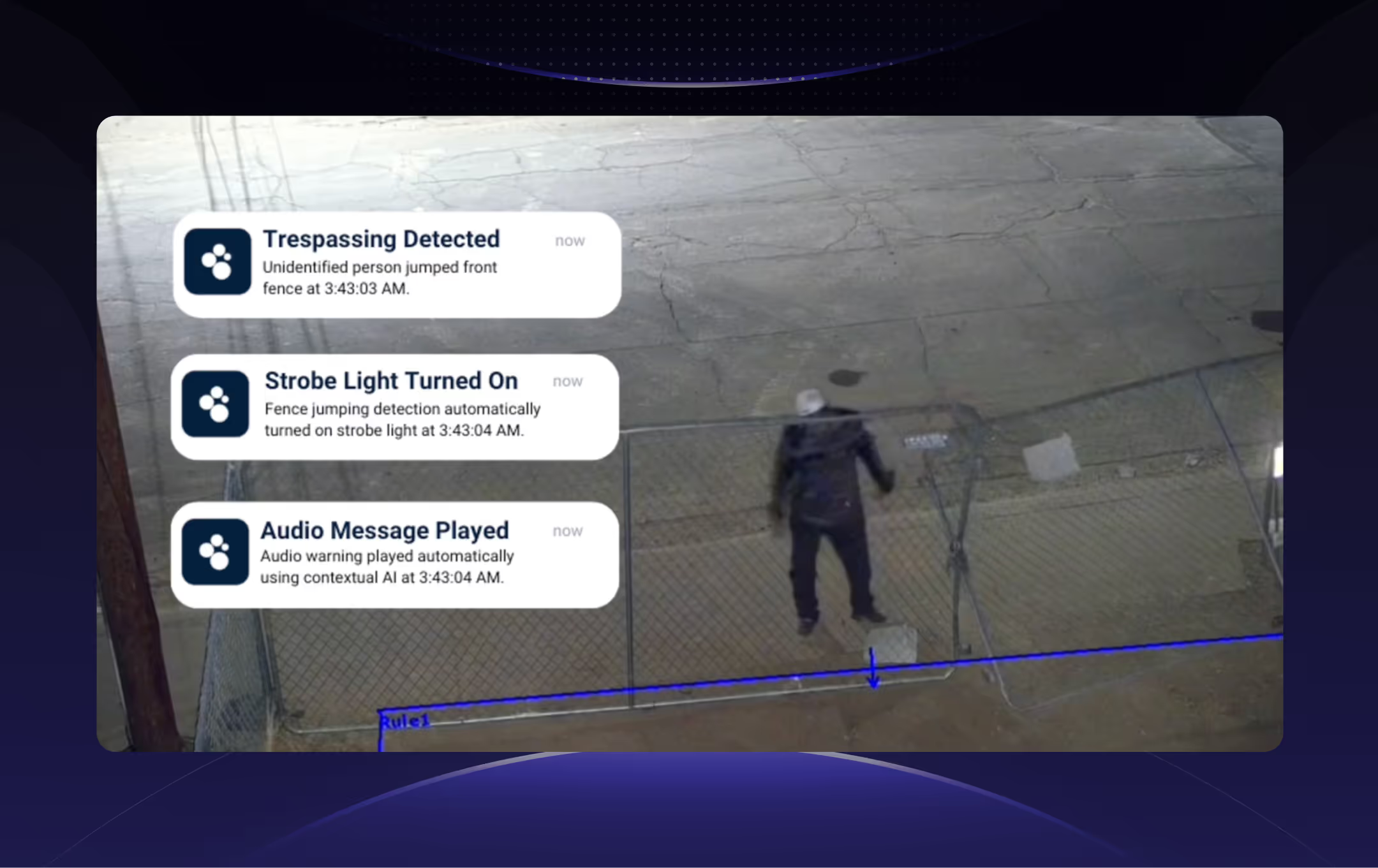

If you are evaluating parking lot camera systems for a multi-site retail portfolio, request a demo to see how AI Security Guard detects, deters, and documents incidents across your parking lots. Explore customer stories from retail teams to see how the platform performs across real deployments.
"We have multiple uses for Spot AI and whether that's reviewing footage from our parking lots or getting a live feed from our offices Spot AI gives us the perfect tools to do this quickly and with precision."
Daniel A., Systems and Programs Coordinator (Source: G2)
Frequently asked questions
What are the most effective security measures for retail parking lots
A layered approach delivers the strongest results. Combine fixed cameras (dome for overview, bullet for choke points) with PTZ units for active tracking, LPR at entry and exit gates, adequate lighting (1–2 foot-candles per NFPA 730), and visible deterrence such as mobile trailers or audio warning systems. Visible camera equipment alone reduces burglary attempts by 60%, according to studies cited by Rutgers and UNC (Source: SecureNH).
How much does a comprehensive parking lot camera system cost
A basic four-camera NVR kit starts at $500–$1,500 for a single small location. Mid-range eight-camera setups with AI analytics run $2,000–$10,000. Enterprise deployments of 50+ cameras exceed $15,000 in hardware alone, with installation adding roughly 20% to total cost (Source: Eufy Commercial). Add cloud VMS subscriptions ($50–$200 per month per location) and remote monitoring services ($100–$300 per month per location) for ongoing operational costs.
How can video AI improve parking lot security beyond traditional cameras
Traditional camera systems record footage for after-the-fact review. Video AI adds context-aware detections—loitering, unauthorized entry, suspicious vehicle patterns—and triggers automated responses such as audio warnings and strobe activation within seconds. AI-assisted search reduces investigation time from hours to minutes by letting teams filter footage by object type, behavior, or time window (Source: TG&H).
What compliance standards apply to retail parking lot camera systems
ASIS Physical Security Standard (PSP) Section 3.2 requires continuous camera coverage of all lot entry and exit points with a minimum 30-day footage retention policy, and NFPA 730 Chapter 7 specifies lighting levels, perimeter controls, and emergency communication device placement (Source: PopProbe). For video evidence admissibility, Federal Rule of Evidence 901 requires authenticated footage with clear timestamps and documented chain of custody (Source: Brandon J. Broderick).
About the author
Joshua Foster is an IT Systems Engineer at Spot AI, where he focuses on designing and securing scalable enterprise networks, managing cloud-integrated infrastructure, and automating system workflows to enhance operational efficiency. He is passionate about cross-functional collaboration and takes pride in delivering robust technical solutions that empower both the Spot AI team and its customers.






.png)
.png)
.png)